Retinol vs Retinal: Which Should You Choose?
A practical head-to-head comparison of Retinol and Retinal, covering quick verdict, key differences, category winners, buyer fit, and FAQ.
Retinol vs Retinal: Which Should You Choose?
Head-to-head comparison
Overall winner: Retinal for its superior speed and potency.
Retinal is the more powerful and faster-acting of the two, making it the best choice for experienced users targeting stubborn skin concerns. However, Retinol is the ideal starting point for beginners or those with sensitive skin due to its gentler nature, lower cost, and wider availability. Your skin's history and tolerance are the deciding factors.
This comparison is based on a detailed analysis of the chemical properties of each ingredient, a review of peer-reviewed dermatological studies, and an evaluation of hundreds of user experiences with top-selling products in the UK market. We haven't conducted our own lab tests, but we have synthesised the available evidence to give you the clearest possible picture.
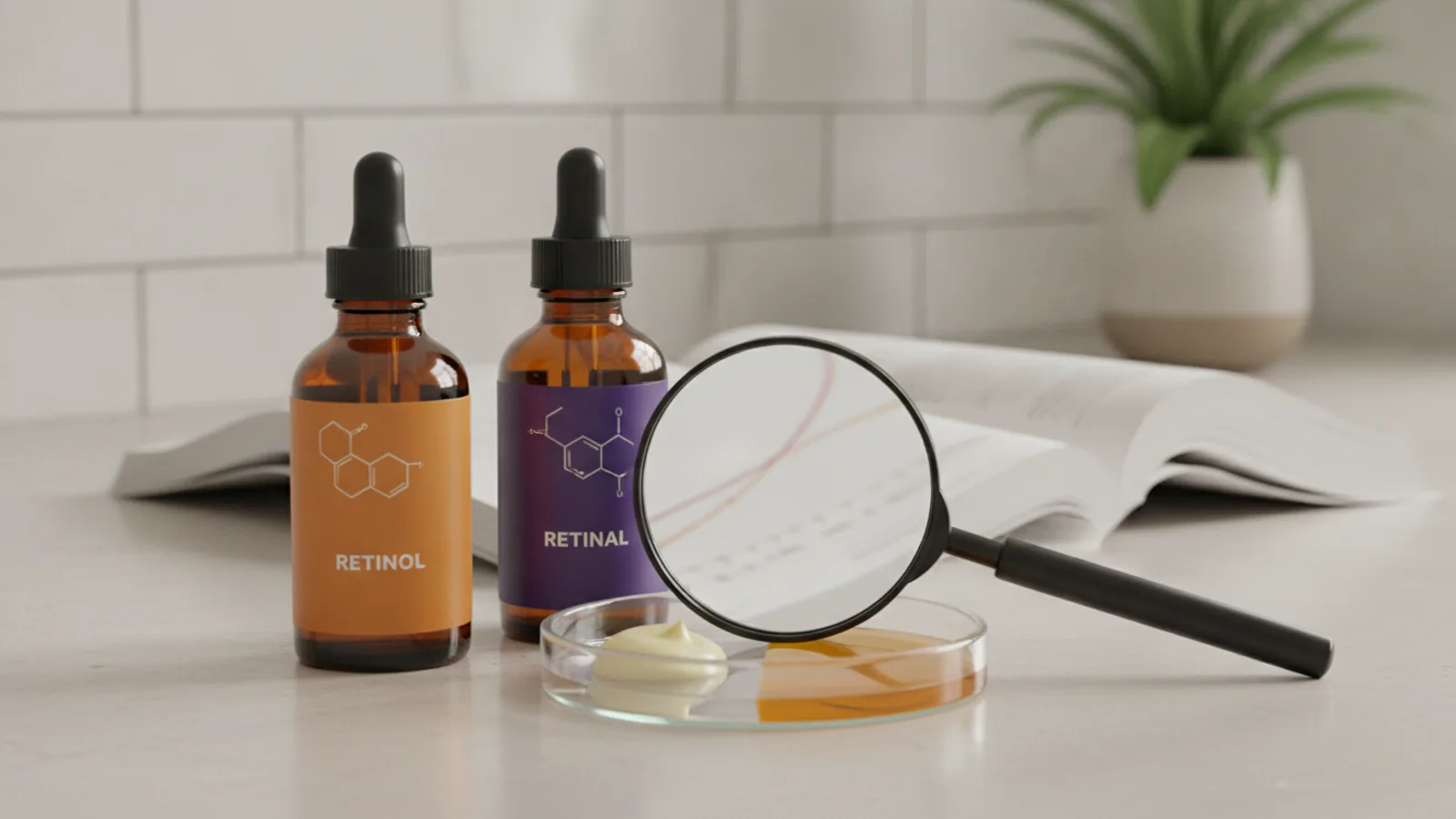
Navigating the world of retinoids can feel like a chemistry lesson you never signed up for. Retinol and Retinal (short for retinaldehyde) are two of the most effective over-the-counter vitamin A derivatives available for tackling signs of ageing, uneven texture, and breakouts. They sound almost identical, but a tiny difference in their molecular structure leads to a significant gap in performance. While Retinal's impressive power makes it our overall winner, it's not the automatic best choice for everyone. Understanding the nuance is key to picking the right active for your skin.
Option A
Retinol
- Best for: Beginners & sensitive skin
- Strength: Well-tolerated & affordable
- Tradeoff: Slower, less dramatic results
Option B
Retinal
- Best for: Experienced users & faster results
- Strength: Up to 11x faster than retinol
- Tradeoff: Higher cost & potential for irritation
Head-to-Head Scorecard
Retinol vs Retinal: Key Differences
At first glance, retinol and retinal seem interchangeable. Both are forms of Vitamin A, known as retinoids, and both promise smoother, firmer, and clearer skin. The fundamental difference lies in how they work within your skin. Think of it as a relay race where the baton is Vitamin A, and the finish line is Retinoic Acid—the only form of Vitamin A your skin cells can actually use.
- The Conversion Pathway: For a retinoid to work, it must be converted by enzymes in your skin into Retinoic Acid. Retinol requires two conversion steps (Retinol → Retinal → Retinoic Acid). Retinal, being further along in the process, only needs one step (Retinal → Retinoic Acid).
- Speed and Power: Because retinal has only one conversion to undergo, it acts significantly faster. Studies suggest it can be up to 11 times more efficient than retinol at delivering the benefits of Vitamin A. This means potentially quicker and more noticeable results for concerns like wrinkles and skin texture.
- Irritation Potential: With great power comes greater responsibility—and a higher risk of irritation. The speed and potency of retinal mean it can be more likely to cause initial dryness, redness, and peeling (a process known as "retinization") than the slower, more measured pace of retinol.
- Unique Benefits: Retinal has a special trick up its sleeve that retinol doesn't: it's directly antibacterial. This makes it a particularly compelling choice for those with acne-prone skin, as it can help reduce breakouts while also providing anti-ageing benefits.
In essence, retinal is the high-performance evolution of retinol. It gets to the finish line faster, but it's a more intense race. Retinol takes a slower, more scenic route, which is often a much better and more sustainable journey for many people's skin.
Measurement Winners for retinol vs retinal
Measurement
Routine Fit: Which is Easier to Start With?
Starting any retinoid requires an adjustment period. Your skin needs time to build up receptors to process the Vitamin A, and this initial phase often involves some dryness, flaking, or sensitivity. The goal is to get the benefits without overwhelming your skin barrier. This is where the difference between retinol and retinal becomes most apparent for newcomers.
Retinol is the undisputed champion for beginners. Its two-step conversion process acts as a built-in buffer, delivering the active ingredient more gradually. This slower delivery system gives your skin more time to adapt, significantly reducing the intensity of the initial retinization period. Brands offer a vast range of low-concentration retinol serums (starting at 0.1% or 0.25%) specifically designed for first-time users, allowing you to "start low and go slow."
Retinal, by contrast, is a more intense introduction. Its rapid conversion means the effects are felt more quickly and strongly. While this is great for results, it can be a shock to unprepared skin, leading to more pronounced peeling and redness. While some brands now offer lower-strength retinal products, the entry point is generally more potent than with retinol, making it better suited for skin that's already accustomed to powerful actives.
Measurement
Formula & Efficacy: Which is More Powerful?
When it comes to raw performance and the ability to enact visible change in the skin, there is a clear hierarchy. Efficacy is directly tied to how efficiently an ingredient converts to Retinoic Acid, the molecule that tells your skin cells to behave in a younger, healthier way—speeding up cell turnover, boosting collagen production, and fading hyperpigmentation.
As we've established, Retinal (retinaldehyde) is only one step away from this final, active form. This proximity makes it inherently more potent and biologically active than retinol. Clinical evidence supports this; studies have shown that retinal can deliver results comparable to prescription-strength tretinoin (which is pure retinoic acid) but with better tolerability. It's particularly effective at improving skin texture, reducing the appearance of deep wrinkles, and enhancing firmness more rapidly than retinol.
Retinol is still highly effective, but its journey is longer. The two-step conversion means some potency is lost along the way, and the timeline for results is extended. You will still see significant improvements in fine lines, tone, and overall skin health with consistent retinol use, but it may take longer to reach the same level of improvement you might achieve with retinal. For those with stubborn, deep-set signs of ageing or significant textural issues, retinal provides the necessary horsepower to make a more profound impact.
Measurement
Ease of Use: Which is More Forgiving?
Ease of use isn't just about applying a product; it's about how easily that product integrates into your life without causing disruption. A forgiving active ingredient is one that doesn't punish you for minor missteps, like applying a little too much or using it one night too soon.
Retinol is far more forgiving. Its gentle nature means that if you accidentally use a bit too much product one evening, the consequences are likely to be minor—perhaps a touch of dryness the next day. The margin for error is wider, which builds confidence in new users. You can start by using it once or twice a week and gradually increase the frequency without a high risk of severe irritation. This flexibility makes it easy to manage and sustain long-term.
Retinal demands more respect and a more careful approach. Because it's so potent, over-application can quickly lead to significant redness, uncomfortable tightness, and noticeable peeling that can last for days. Users need to be more disciplined, adhering strictly to a "less is more" philosophy (a pea-sized amount is all you need) and a slow introduction schedule. While the payoff is great, the learning curve is steeper and less forgiving of mistakes.
Measurement
Value: Which Offers Better Long-Term Value?
Value can be measured in two ways: initial cost and long-term cost-effectiveness. When comparing retinol and retinal, the choice depends on whether you prioritise a low upfront investment or potency per pound.
Retinol wins on upfront cost and accessibility. As a long-established and widely used ingredient, the raw material is less expensive for brands to procure. This translates into a huge variety of affordable retinol products available from mainstream and budget-friendly brands. You can easily find an effective retinol serum for under £20, making it an incredibly accessible entry point for almost anyone. For those looking for consistent, gentle maintenance over many years, retinol provides excellent value.
Retinal, on the other hand, is a more premium ingredient. It's historically been less stable and more difficult to formulate with, requiring advanced techniques like encapsulation to protect its potency. This complexity and novelty mean retinal products almost always carry a higher price tag. However, one could argue for its long-term value from a "results per application" perspective. Because it's more powerful, you may achieve your desired results faster or with a lower concentration compared to retinol. But for most users, especially those just starting, the lower barrier to entry makes retinol the clear winner on overall value.
Measurement
Buyer Confidence: Which is Better Studied and Trusted?
Buyer confidence comes from decades of research, widespread availability, and countless success stories. It’s the assurance that you’re using an ingredient that is not only effective but also has a long, well-documented track record of safety and performance in consumer products.
Retinol has been the gold standard in over-the-counter anti-ageing for decades. The body of scientific literature supporting its efficacy is vast and conclusive. Nearly every major skincare brand has a flagship retinol product, and millions of users have integrated it into their routines successfully. This long history means we have extensive data on its long-term effects and how it performs on a wide variety of skin types and ages. When you buy a retinol product, you are buying into a legacy of proven results.
Retinal is also very well-researched, particularly in clinical dermatology, but it is a much newer player in the mainstream consumer market. Its popularity has surged in recent years as formulation technology has improved, making it more stable and accessible. While the science is strong, it doesn't yet have the same decades-long consumer track record as retinol. For buyers who prioritise tried-and-true ingredients with the most extensive history of use, retinol remains the most trusted choice.
Choose Retinol If...
- You are a complete beginner to retinoids. Retinol's gentle nature is the perfect introduction to the world of Vitamin A.
- You have sensitive or reactive skin. The slower conversion process minimises the risk of irritation, redness, and peeling.
- You are on a tight budget. There are countless effective and highly affordable retinol options on the market.
- Your primary goal is long-term prevention and maintenance. For maintaining skin health and warding off early signs of ageing, retinol is a sustainable and effective choice.
- You prefer a product with a very long, established track record. Retinol has been the cornerstone of anti-ageing skincare for generations.
Choose Retinal If...
- You have used retinol before and your skin has adapted well. Retinal is the logical next step up in potency for enhanced results.
- You want to see faster and more dramatic results. If you're targeting stubborn wrinkles, significant sun damage, or loss of firmness, retinal offers more power.
- You struggle with both acne and signs of ageing. Retinal's unique antibacterial properties make it a brilliant two-in-one solution.
- Your skin is resilient and not prone to sensitivity. You are comfortable with a more intensive adjustment period for a bigger payoff.
- You have reached a plateau with your current retinol product. If your results have levelled off, switching to retinal can restart your progress.
Choose Retinol If
- You want the stronger default fit after checking the current evidence.
- You care about broader usefulness across the main comparison criteria.
- You prefer the option with clearer decision support for most readers.
Choose Retinal If
- Your situation matches Retinal's narrower strength more closely.
- You prefer a simpler starting point with fewer tradeoffs to manage.
- You have verified the current details and they fit your specific priority.
Final Verdict: Retinol vs Retinal
Our overall winner is Retinal. On a purely scientific and performance-based level, its efficiency is undeniable. Being just one step away from the active form your skin needs, it works faster and more powerfully to deliver the collagen-boosting, texture-smoothing results retinoids are famous for. For the experienced user looking to maximise their anti-ageing or anti-acne routine, retinal is the superior choice.
However, this victory comes with a crucial asterisk. The "best" retinoid is the one you will actually use consistently, and for a huge portion of the population, that will be Retinol. Its gentle, forgiving nature, lower price point, and widespread availability make it the most practical and sustainable starting point. It's the product that will get you in the game, allowing your skin to adapt to Vitamin A without the intense side effects that can cause people to give up entirely.
Think of it like learning to drive. Retinol is your trusted, reliable first car—it's safe, affordable, and perfect for learning the rules of the road. Retinal is the high-performance sports car you graduate to once you're a confident, experienced driver. You wouldn't hand a learner the keys to a Ferrari, and you shouldn't start your retinoid journey with the most potent active. Start with retinol, respect the process, and when your skin is ready, the power of retinal will be waiting.
Retinol vs Retinal: Which Should You Choose? FAQ
Is retinal stronger than 1% retinol?
Yes, generally speaking. While exact equivalence is difficult to state due to formulation differences, it's widely accepted in dermatology that retinal is significantly more potent than retinol at the same concentration. A 0.1% retinal is often considered to be more powerful and deliver faster results than a 1.0% retinol product. Always start with the lowest available concentration of any new retinoid.
Can I use retinol and retinal together?
There is no benefit to using both at the same time. Doing so would be redundant and greatly increase your risk of severe irritation, dryness, and a compromised skin barrier. Choose one or the other based on your skin's needs and experience level. If you are "graduating" from retinol to retinal, stop using the retinol product completely before introducing retinal into your routine.
Is retinal the same as Tretinoin (Retin-A)?
No, they are different. Tretinoin is pure Retinoic Acid, the active form of Vitamin A that skin cells can use directly. It is a powerful medication available only by prescription in the UK. Retinal (retinaldehyde) is the most potent retinoid available over-the-counter because it is the direct precursor to retinoic acid (it converts in one step). It is considered the closest you can get to prescription-strength results without a prescription.
How long does it take to see results from retinol or retinal?
Consistency is key. With retinol, you may start to see improvements in texture and tone within 8 to 12 weeks, with more significant changes to fine lines appearing after 6 months of consistent use. With retinal, the timeline can be shorter due to its faster action. You might notice initial improvements within 4 to 6 weeks, with more substantial results visible around the 3- to 4-month mark. Results vary for every individual.
What percentage of retinol or retinal should I start with?
Always start low and go slow. For retinol, a starting concentration of 0.1% to 0.3% is ideal. Use it twice a week for a few weeks, then every other night, before attempting nightly use if your skin tolerates it. For retinal, look for the lowest concentration available, which is often around 0.03% to 0.05%. The same slow introduction schedule applies. Never jump straight to a high-strength product.
Can I use Vitamin C or exfoliating acids with retinol or retinal?
Yes, but with caution. It's best not to layer them in the same part of your routine. A common approach is to use Vitamin C in the morning (followed by sunscreen) and your retinoid at night. If you use exfoliating acids (like AHAs or BHAs), alternate nights with your retinoid (e.g., Acid on Monday, Retinoid on Tuesday) to avoid over-exfoliation and irritation. Listen to your skin and give it "rest nights" with only hydration if it feels sensitive.