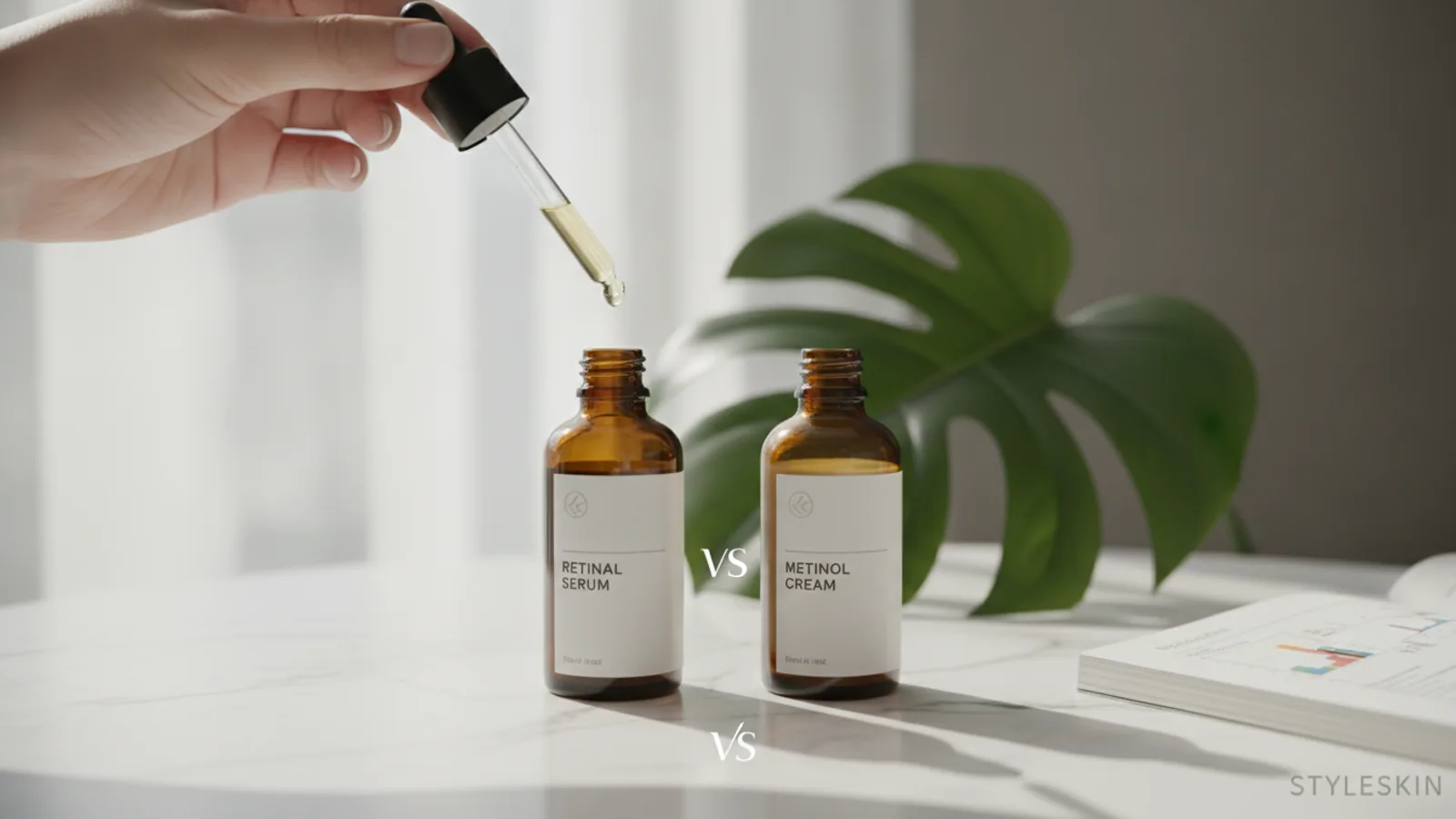
Retinol vs Retinoid: Which Should You Choose?
A practical head-to-head comparison of Retinol and Retinoid, covering quick verdict, key differences, category winners, buyer fit, and FAQ.
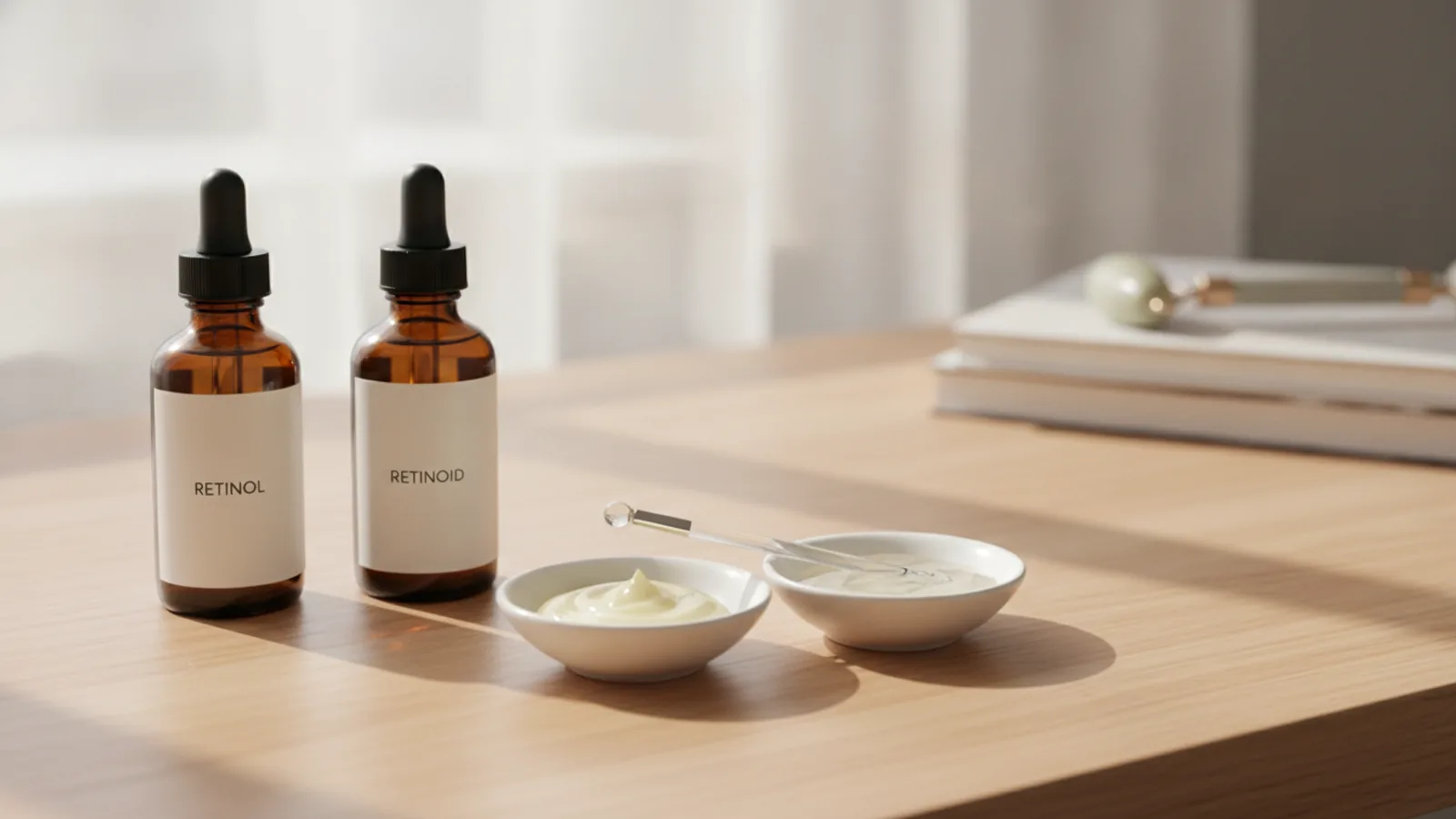
Retinol vs Retinoid: Which Should You Choose?
Head-to-head comparison
Overall winner: Prescription Retinoids for their unmatched clinical strength and speed of results.
For those targeting significant concerns like moderate-to-severe acne or deep-set wrinkles, prescription retinoids offer the most powerful and fastest-acting solution. However, for beginners, those with sensitive skin, or anyone focused on preventative anti-ageing and general texture improvement, over-the-counter Retinol is the smarter, gentler, and more accessible choice.
This comparison is based on decades of dermatological research, clinical data, and an analysis of formulation science. We're here to cut through the confusion and help you make an informed choice for your skin in 2026.
Retinol and retinoids are both derivatives of Vitamin A, celebrated for their ability to accelerate skin cell turnover and boost collagen production. The key difference lies in their strength and how they work on your skin. "Retinoid" is the name of the entire family, but in skincare, it typically refers to potent, prescription-strength forms like Tretinoin. Retinol is its gentler, over-the-counter (OTC) cousin. Choosing a winner isn't about picking the strongest option; it's about matching the right active to your specific skin goals, patience, and tolerance for side effects.
Option A
Retinol
- Best for: Beginners & sensitive skin
- Strength: Gentle introduction to Vitamin A
- Tradeoff: Results are slower and more subtle
Option B
Retinoid
- Best for: Acne, deep wrinkles & sun damage
- Strength: Gold-standard clinical power
- Tradeoff: Requires prescription & causes irritation
Head-to-Head Scorecard
Retinol vs Retinoid: Key Differences
Understanding the core difference between retinol and prescription retinoids unlocks why they perform so differently. It all comes down to a chemical conversion process that happens within your skin.
The active ingredient that actually creates change in your skin cells is Retinoic Acid. Prescription retinoids, like the well-known Tretinoin, are pure retinoic acid. When you apply them, your skin can use them immediately. There are no intermediate steps, which is why they are so powerful and fast-acting.
Over-the-counter Retinol, on the other hand, is a few steps away from being active. When you apply a retinol serum or cream, your skin's enzymes must first convert it into Retinaldehyde, and then convert that Retinaldehyde into Retinoic Acid. This two-step conversion process means:
- It's Weaker: Some of the ingredient is lost at each conversion step, so the final amount of active retinoic acid is much lower than what you'd get from a direct prescription application. It's estimated that tretinoin is around 20 times more potent than retinol.
- It's Slower: The conversion takes time, so results take longer to become visible.
- It's Gentler: This slow, gradual conversion is much less of a shock to the system, resulting in significantly less irritation, redness, and peeling compared to its prescription-strength counterpart.
Think of it like this: a prescription retinoid is like having a key that fits the lock perfectly. Retinol is like being given a piece of metal and a file; you can eventually shape it into the right key, but it takes more time and effort.
Measurement
Routine Fit & Tolerability
How easily an active fits into your existing skincare routine is a critical factor for long-term success. This is where the gentle nature of retinol gives it a decisive edge. For most users, introducing an over-the-counter retinol involves minimal disruption. You might experience some mild dryness or flaking for a week or two, but it's often manageable by starting slowly (2-3 times per week) and buffering with a good moisturiser.
Prescription retinoids, in contrast, demand respect. The initial adjustment period, often called "retinization," can be intense. It commonly involves significant redness, peeling, dryness, and a potential "purge" where acne temporarily worsens. Successfully starting a prescription retinoid often means stripping your routine back to the bare essentials: a gentle cleanser, a simple moisturiser, and sunscreen. Exfoliating acids, Vitamin C serums, and other actives usually have to be paused completely for weeks or even months to allow the skin to acclimatise. This makes it a much more demanding and less flexible active to incorporate.
Measurement
Potency & Speed of Results
When it comes to raw power and the speed at which you see transformative results, there is no contest. Prescription retinoids are the undisputed champions. Because they are biocompatible as pure retinoic acid, they get to work immediately, directly signalling to skin cells to increase turnover and collagen synthesis.
This makes them the gold standard for treating dermatological concerns. For moderate-to-severe acne, they help to rapidly clear clogged pores and reduce inflammation. For significant photoageing—characterised by deep wrinkles, skin laxity, and stubborn hyperpigmentation—their ability to remodel the dermal matrix is backed by decades of clinical studies. Users often report visible improvements in texture and acne within 4-12 weeks.
Retinol can achieve similar, albeit less dramatic, results. It is highly effective for improving the appearance of fine lines, general skin tone, and mild textural irregularities. However, due to the two-step conversion process, the timeline is much longer. Consistent use for 3 to 6 months is typically required before noticeable improvements in anti-ageing are seen.
Measurement
Ease of Use & Accessibility
Accessibility is a straightforward win for retinol. You can purchase retinol products from virtually anywhere that sells skincare: pharmacies like Boots and Superdrug, department stores, and countless online retailers. There are thousands of formulations available at every price point, from budget-friendly options to luxurious, cosmetically elegant serums. This freedom allows you to research, select, and start using a product on the very same day.
Acquiring prescription retinoids in the UK requires a medical consultation. This traditionally means a visit to your GP, who may then refer you to a dermatologist. A more modern and increasingly popular route is through online dermatology subscription services (such as Dermatica or Skin+Me), which involve an online consultation with a prescribing professional. While these services have made access much easier, they still involve a necessary medical gatekeeping step, a waiting period, and a recurring subscription cost. You cannot simply walk into a shop and buy Tretinoin.
Measurement
Value for Money
Determining the "best value" is complex, as it depends heavily on your access route and product choice. It's not a simple case of one being cheaper than the other.
A prescription for a generic Tretinoin cream or gel through the NHS in England is extremely cost-effective, costing only the standard prescription charge. This makes it, by far, the cheapest way to access the most powerful form of Vitamin A. However, access can be dependent on your GP's assessment of your clinical need.
Private online dermatology services typically charge around £20-£25 per month for a custom-blended formula, which often includes other beneficial ingredients. This offers convenience and expert formulation but comes at a higher recurring cost.
The over-the-counter retinol market has a vast price range. You can find effective, basic retinol serums for as little as £10, while high-end brands can charge upwards of £150 for advanced formulations with patented delivery systems and supporting ingredients. A good mid-range retinol often sits between £25-£50 for a bottle that lasts several months.
Because "value" is about results per pound spent, this category is a tie. The low cost of an NHS prescription offers incredible value for its potency, while the accessibility and choice within the OTC market mean you can find a retinol that fits almost any budget.
Measurement
Buyer Confidence in Results
Buyer confidence comes from the certainty that a product will deliver on its promises. In this regard, prescription retinoids have a clear advantage rooted in medical science. Decades of robust, independent, peer-reviewed clinical trials have established Tretinoin and other prescription-strength retinoids as effective treatments for specific medical conditions like acne vulgaris and photoageing. When a doctor prescribes a retinoid, there is a high degree of certainty, supported by data, that it will work for its intended purpose.
The over-the-counter retinol market is, by contrast, the "Wild West." While the efficacy of the retinol molecule itself is well-documented, the performance of a specific product is not guaranteed. Efficacy can be affected by the concentration of retinol, the stability of the formulation (Vitamin A is notoriously unstable when exposed to light and air), the sophistication of the delivery system, and the other ingredients in the formula. Marketing claims can be vague, and it is often difficult for a consumer to know if a £15 serum is as stable and effective as a £90 one. This variability leads to less certainty in the outcome.
Choose Retinol If...
- You are a beginner to Vitamin A and want to start with a gentle, introductory product.
- You have sensitive or reactive skin that doesn't tolerate strong actives well.
- Your primary goals are preventative anti-ageing, improving fine lines, and achieving a more radiant skin tone.
- You want the convenience of buying a product over-the-counter without a consultation.
- You are not willing or able to tolerate several weeks of significant peeling, redness, and irritation.
Choose Retinoid If...
- You have moderate to severe acne (including blackheads, whiteheads, and inflammatory spots) that hasn't responded to other treatments.
- You are targeting significant signs of sun damage, including deep-set wrinkles, skin laxity, and stubborn hyperpigmentation.
- You want the fastest and most dramatic results possible and are seeking a clinically proven solution.
- You have access to a GP or dermatologist and are prepared for the "retinization" adjustment period.
- You understand the importance of a supporting routine with gentle products and are committed to daily sunscreen use.
Choose Retinol If
- You want the stronger default fit after checking the current evidence.
- You care about broader usefulness across the main comparison criteria.
- You prefer the option with clearer decision support for most readers.
Choose Retinoid If
- Your situation matches Retinoid's narrower strength more closely.
- You prefer a simpler starting point with fewer tradeoffs to manage.
- You have verified the current details and they fit your specific priority.
Final Verdict: Retinol vs Retinoid
Our overall winner is the Prescription Retinoid. For its intended purposes—treating acne and reversing significant signs of photoageing—its power, speed, and wealth of clinical evidence are simply unmatched. When you need a heavy-duty tool for a significant job, you choose the one that is proven to work most effectively, and in the world of skincare, that is a prescription retinoid.
However, this win comes with a major caveat. A powerful tool is not always the right tool. For a huge portion of the population, the intensity of a prescription retinoid is unnecessary and the side effects are undesirable. Retinol is the clear and sensible winner for anyone starting their anti-ageing journey, those with sensitive skin, or individuals looking for long-term, sustainable skin maintenance without disruption. Its accessibility and gentleness make it a profoundly practical and effective choice for improving overall skin health, texture, and fine lines over time.
Ultimately, the best choice is personal. If your skin concerns are significant, speak to a doctor or dermatologist about a prescription retinoid. If you're looking for accessible, preventative care and a healthy glow, the vast and varied world of over-the-counter retinol is the perfect place to start.
Retinol vs Retinoid: Which Should You Choose? FAQ
What's the difference between Retinoid, Retinol, and Tretinoin?
"Retinoid" is the umbrella term for the entire family of Vitamin A derivatives. "Retinol" is a specific type of retinoid that is sold over-the-counter and needs to be converted by the skin to become active. "Tretinoin" (brand names include Retin-A) is another specific type of retinoid; it is pure retinoic acid, the active form, and is only available via prescription.
Where does Retinal (Retinaldehyde) fit in?
Retinal (or Retinaldehyde) is the intermediate step in the skin's conversion process: Retinol → Retinal → Retinoic Acid. Because it is only one step away from the active form, it is stronger and faster-acting than retinol, but typically gentler than prescription retinoic acid. It's an excellent and increasingly popular over-the-counter option for those who find retinol too slow but prescription retinoids too harsh.
Can I use Retinol and a prescription Retinoid together?
No, you should never use them together. They are both forms of Vitamin A, and using them at the same time would be far too much for the skin, leading to severe irritation, redness, and a compromised skin barrier. Choose one or the other based on your needs and professional guidance.
What is the "retinoid purge" or "retinization"?
This is the adjustment period your skin goes through when starting a potent retinoid. As the retinoid dramatically speeds up cell turnover, it can push underlying microcomedones (clogged pores) to the surface all at once, leading to a temporary worsening of breakouts. It can also cause dryness, peeling, and redness as the skin adapts. This period usually lasts from 2 to 6 weeks. It is much more common and intense with prescription retinoids than with OTC retinol.
Do I really need to wear sunscreen with Retinol or Retinoids?
Yes, absolutely. It is non-negotiable. Retinoids work by revealing new, fresh skin cells. These new cells are more vulnerable to sun damage. Not wearing a broad-spectrum sunscreen of at least SPF 30 every single day will not only negate the benefits of your retinoid but will also leave your skin more susceptible to sun damage, hyperpigmentation, and skin cancer.