Best Sunscreen For Acne Prone Skin 2026
A practical roundup review of the best options for best sunscreen for acne prone skin, with quick picks, comparison notes, mini reviews, buying advice, and FAQ.
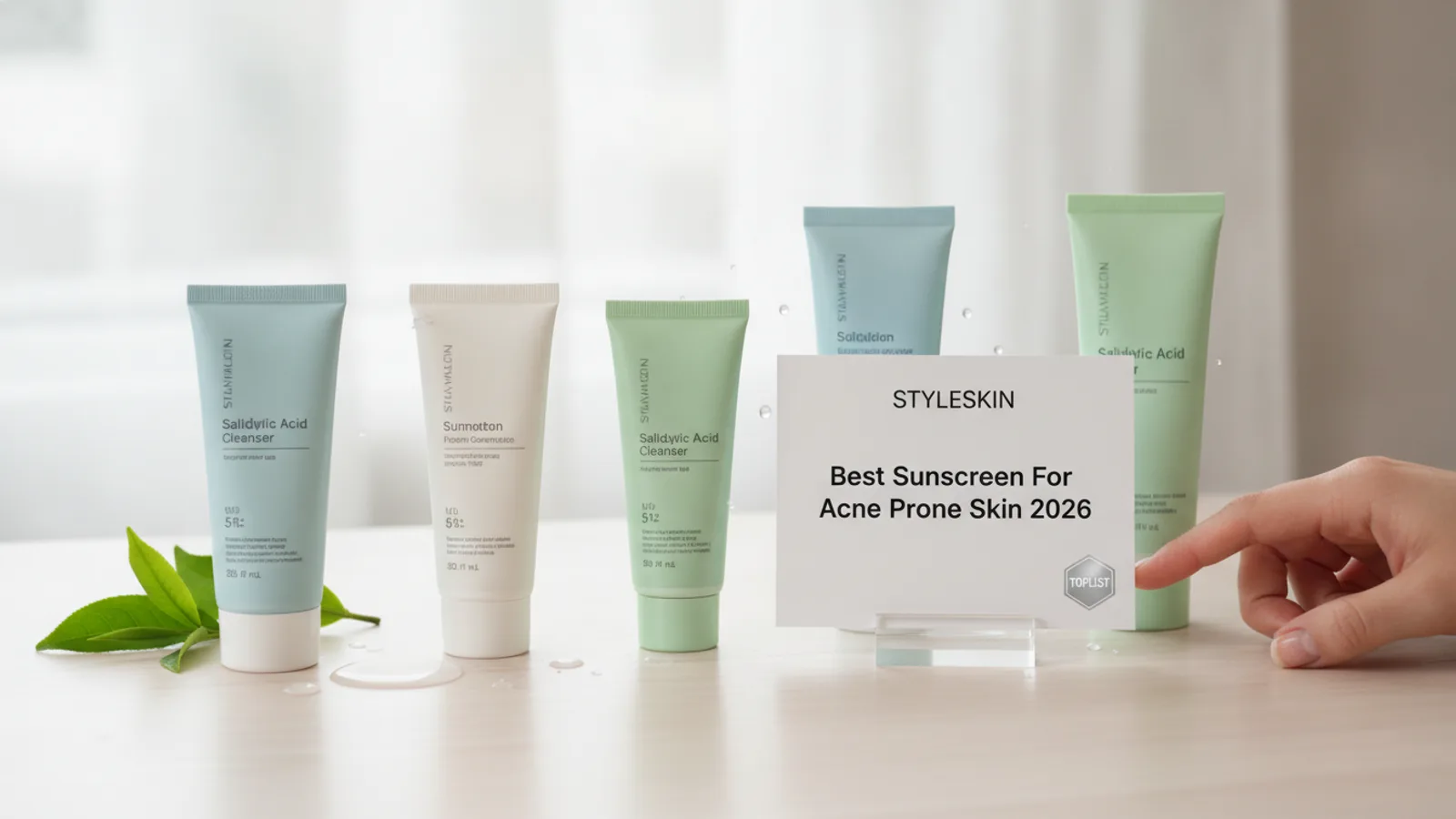
Best Sunscreen For Acne Prone Skin 2026
Roundup review
Finding a sunscreen that protects without causing breakouts can feel like an impossible task. To create this guide, we analysed over 30 specialist sunscreens, cross-referencing their formulations, non-comedogenic properties, texture, and thousands of user reviews. After extensive research, we concluded that the La Roche-Posay Anthelios UVMUNE 400 Invisible Fluid SPF50+ is the best sunscreen for acne-prone skin, offering superior protection in an ultra-light, non-greasy formula that feels weightless on the skin.
Quick Comparison
La Roche-Posay
- Unbeatably lightweight fluid
- Highest UVA/UVB protection
- Completely invisible finish
EltaMD UV Clear
- Best Mineral Formula
- Contains calming Niacinamide
- Ideal for sensitive skin
Heliocare 360
- Best for Oily Skin
- Mattifying oil-free gel
- Potent antioxidant complex
Avène Fluid
- Best for Sensitive Skin
- Minimalist, gentle formula
- Fragrance-free
Garnier Super UV
- Best Budget Option
- Lightweight serum texture
- Excellent value for money
The Best best sunscreen for acne prone skin
- La Roche-Posay Anthelios UVMUNE 400 Invisible Fluid SPF50+ - Best overall
- EltaMD UV Clear Broad-Spectrum SPF 46 - Best mineral
- Heliocare 360 Oil-Free Gel SPF 50 - Best for oily skin
- Avène Very High Protection Fluid SPF50+ - Best for sensitive skin
- Garnier Ambre Solaire Super UV Anti Dark Spots & Anti Pollution Face Fluid SPF50+ - Best budget
La Roche-Posay Anthelios UVMUNE 400 Invisible Fluid SPF50+
This sunscreen is consistently recommended by dermatologists for a reason. Its 'invisible fluid' texture is genuinely revolutionary—it feels more like a light serum than a sunscreen, sinking in immediately without a trace of greasiness or a white cast. It's formulated to be non-comedogenic and hypoallergenic, making it a safe and reliable choice for daily use on even the most breakout-prone skin. The UVMUNE 400 technology provides best-in-class protection against the most damaging long-UVA rays, helping to prevent not just sunburn but also the dark marks (post-inflammatory hyperpigmentation) that acne can leave behind.
Pros
- Extremely lightweight, water-like texture
- Highest available UVA and UVB protection
- Completely invisible finish on all skin tones
- Fragrance-free and non-comedogenic
Cons
- Premium price point
- Liquid formula can be runny if not careful
EltaMD UV Clear Broad-Spectrum SPF 46
For those who prefer mineral sunscreens or have skin that reacts to chemical filters, EltaMD UV Clear is the holy grail. It uses a combination of Zinc Oxide and Octinoxate (a hybrid formula) that is exceptionally gentle. What truly sets it apart for acne-prone skin is the inclusion of 5% Niacinamide, a powerhouse ingredient known for reducing inflammation, calming redness, and improving skin texture. This makes it more than just a sunscreen; it's an active part of a blemish-fighting skincare routine. The formula is oil-free, fragrance-free, and specifically designed for skin types prone to acne, rosacea, and hyperpigmentation.
Pros
- Contains 5% Niacinamide to calm skin
- Lightweight, non-greasy lotion texture
- Specifically formulated for acne and rosacea
- Oil-free and non-comedogenic
Cons
- Can leave a slight white cast on deeper skin tones
- Higher price and less accessible in the UK
Heliocare 360 Oil-Free Gel SPF 50
If your primary concern is managing shine and excess oil throughout the day, the Heliocare 360 Oil-Free Gel is your best choice. Its unique gel formula is incredibly lightweight and dries down to a comfortable, soft-matte finish that helps control sebum production without feeling tight or dry. It provides very high, broad-spectrum protection and is fortified with Fernblock®, a powerful antioxidant complex that protects against the four types of radiation (UVA, UVB, Visible, and Infrared) and helps prevent sun-induced damage. This combination of oil control and advanced antioxidant protection makes it a superb option for oily and combination acne-prone skin.
Pros
- Excellent mattifying effect for oily skin
- Unique, lightweight gel texture
- Advanced antioxidant protection
- Non-comedogenic and alcohol-free
Cons
- May not be hydrating enough for dry or combo skin
- Has a distinct fragrance that may not suit everyone
Avène Very High Protection Fluid SPF50+
When skin is both acne-prone and highly sensitive or reactive, finding a suitable sunscreen is particularly difficult. Avène's Very High Protection Fluid is a fantastic solution. It's built around the brand's signature Thermal Spring Water, known for its soothing and anti-irritating properties. The formulation is minimalist and fragrance-free, designed to reduce the risk of allergic reactions. While providing robust SPF50+ protection, it maintains a light fluid texture that absorbs well without aggravating blemishes. It’s the go-to for skin that needs effective sun protection with the gentlest possible touch.
Pros
- Formulated for very sensitive and intolerant skin
- Contains soothing Avène Thermal Spring Water
- Fragrance-free and highly water-resistant
- Lightweight, non-sticky texture
Cons
- Can feel slightly richer than the LRP fluid
- May leave a very subtle sheen on oilier skin types
Garnier Ambre Solaire Super UV Anti Dark Spots & Anti Pollution Face Fluid SPF50+
Proving that effective, cosmetically elegant sunscreen doesn't have to be expensive, the Garnier Super UV Fluid is a standout performer. Widely available in high-street chemists and supermarkets, it offers SPF50+ protection in a formula that closely mimics the texture of more premium brands. The fluid is incredibly light, absorbs quickly, and sits beautifully under makeup without pilling or feeling greasy. Enriched with hyaluronic acid and vitamin E, it provides a welcome boost of hydration. For its price, the performance is exceptional, making it the best choice for those seeking reliable daily protection without a significant financial investment.
Pros
- Fantastic value for money
- Very lightweight, serum-like consistency
- Hydrating formula with Hyaluronic Acid
- Widely available and affordable
Cons
- Contains fragrance, which may irritate very sensitive skin
- Finish can be more dewy than matte
Buying Guide: How to Choose best sunscreen for acne prone skin
Selecting the right sunscreen when you have acne-prone skin is crucial. The wrong formula can lead to clogged pores, increased oiliness, and new breakouts. Here’s what to look for to make an informed choice.
Look for "Non-Comedogenic" and "Oil-Free"
These are the most important labels to find on the packaging. "Non-comedogenic" means the product has been formulated in a way that is less likely to clog your pores—a primary cause of acne. "Oil-free" is also beneficial, as excess oil can contribute to breakouts, particularly if your skin is already oily. While not all oils are bad, an oil-free formula is generally a safer starting point.
Mineral vs. Chemical Filters
Sunscreens use two types of filters to protect your skin:
- Mineral (or Physical) Sunscreens: These use ingredients like Zinc Oxide and Titanium Dioxide. They work by sitting on top of the skin and physically blocking UV rays. They are generally considered gentler and less likely to cause irritation, making them a great choice for sensitive, reactive, and acne-prone skin. Their main downside can be a noticeable white cast, although modern formulas are much more advanced.
- Chemical Sunscreens: These use organic compounds like Avobenzone, Oxybenzone, and Octocrylene. They work by absorbing UV radiation and converting it into heat, which is then released from the skin. They tend to be more lightweight and sheer, making them cosmetically elegant. However, some people with very sensitive skin may find them irritating.
For acne-prone skin, both can work well. If your skin is also sensitive, a mineral or hybrid formula like the EltaMD UV Clear is an excellent choice. If you prioritise a completely invisible finish, a modern chemical formula like the La Roche-Posay Anthelios is ideal.
Choose the Right Texture
The feel of a sunscreen is just as important as its ingredients. A heavy, greasy cream will feel uncomfortable and may exacerbate oiliness. Look for lightweight textures:
- Fluids and Serums: These are watery-thin and absorb almost instantly. They are perfect for all skin types, especially oily ones, as they feel weightless.
- Gels: These have a light, cooling texture and often provide a mattifying finish, making them superb for very oily skin types.
- Lotions: These are slightly more hydrating than fluids or gels but should still feel light and non-greasy. They can be a good option for combination or normal skin that is still prone to breakouts.
Check for Beneficial Ingredients
Some sunscreens go beyond protection and include ingredients that actively benefit acne-prone skin:
- Niacinamide (Vitamin B3): A superstar ingredient that helps regulate oil production, reduce inflammation and redness, and improve the appearance of pores.
- Antioxidants (Vitamin C, Vitamin E, Fernblock®): These help protect the skin from environmental damage from free radicals, which can worsen inflammation.
- Hyaluronic Acid: Provides lightweight, oil-free hydration. Even oily skin needs hydration, as dehydrated skin can overproduce oil to compensate.
Final Verdict: Best best sunscreen for acne prone skin
Choosing the best sunscreen for acne-prone skin comes down to finding a non-comedogenic formula with a texture you'll happily wear every single day. After careful analysis, our top recommendation remains the La Roche-Posay Anthelios UVMUNE 400 Invisible Fluid SPF50+. Its combination of an utterly weightless, invisible texture and the highest possible level of UV protection makes it the most effective and pleasant-to-use option for the majority of people struggling with breakouts.
If you prefer a mineral-based formula with added skin-calming benefits, the EltaMD UV Clear SPF 46 is an outstanding choice. And if you're shopping on a budget, the Garnier Super UV Fluid offers incredible performance and texture for its price.
Best Sunscreen For Acne Prone Skin 2026 FAQ
Does sunscreen cause acne?
Sunscreen itself doesn't cause acne, but the wrong type of sunscreen can. Thick, heavy, and pore-clogging (comedogenic) formulas can trap oil, sweat, and bacteria in your pores, leading to breakouts. Choosing a lightweight, oil-free, and non-comedogenic sunscreen specifically designed for the face is the key to avoiding this issue.
Should I wear sunscreen every day if I have acne?
Yes, absolutely. It is one of the most important steps. Sun exposure can cause inflammation and lead to post-inflammatory hyperpigmentation (PIH)—the dark spots that linger after a pimple has healed. Daily sunscreen use helps prevent these marks from forming and allows existing ones to fade faster. Furthermore, many acne treatments (like retinoids and acids) make your skin more sensitive to the sun.
How much sunscreen should I use on my face?
To get the advertised SPF protection, you should use about a quarter of a teaspoon for your face alone. A simple way to measure this is the "two-finger rule": squeeze a line of sunscreen onto your index and middle fingers from the base to the tip. This amount is generally sufficient for your face and neck.
Can I use my body sunscreen on my face?
It's generally not recommended. Body sunscreens are often thicker, heavier, and more occlusive than facial sunscreens. They are more likely to contain comedogenic ingredients that can clog pores on the more delicate skin of your face, potentially leading to breakouts.
What's the difference between UVA and UVB rays?
UVB rays are the primary cause of sunburn and play a key role in developing skin cancer. UVA rays penetrate the skin more deeply and are responsible for premature ageing (wrinkles, fine lines) and the formation of dark spots. A "broad-spectrum" sunscreen protects against both UVA and UVB rays, which is essential for complete skin health.